

Time to Read: 3 mins
Last week, I caught myself spiraling over a rather minor tech issue.
I was recording a video when suddenly, midway through, my camera stopped working. I spent half an hour troubleshooting before realizing that the reset button on the power strip had been tripped. 🤦♀️
After I fixed the issue, I realized that throughout the 30-minute ordeal, my inner voice was… let’s just say… less than helpful.
Not once did it say, “This is annoying, but you’ve got it.”
Nope. Instead, it said things like:
“You should’ve tested this earlier.”
“The clock is ticking and you’re wasting time.”
“Maybe this is a sign that you’re not cut out for this.”
All that… over a glitch with a stupid reset button.
Now logically, I knew it wasn’t a big deal. But the emotion behind the moment told me something deeper was going on within me.
Because the problem wasn’t the tech.
The problem was the identity spiral underneath it.

What I experienced is not uncommon.
It goes with our human condition.
We hit a bump in the road, and instead of addressing it as the isolated event it is, we pull it straight into our identity.
“This didn’t work” becomes “I’m bad at this.”
“This wasn’t well received” becomes “I’m not good enough.”
And that little gap between what happened and what it means about us is where the real damage can occur if we’re not paying attention.
Just this past week, I had a client share something similar.
They were preparing for the biggest keynote of their career to date, and one of their practice sessions didn’t go well. They were testing the content in front of a smaller audience, but the reaction they received was flat and disengaged.
Their response?
“I don’t think I’m cut out to speak at this level.”
Now, keep in mind… this is a brilliant, experienced professional who’s highly respected in their field. Yet, one misstep and they were suddenly adopting an unsupportive narrative.
And that’s often what happens in moments of perceived failure…
We don’t lower our standards… we lower our sense of self.
💡Practionable Takeaway
If you relate to this, I want to share a quick tool I use with my clients to help disrupt this pattern.
It’s a one-minute reset to help you catch identity spirals before they take over. And it goes like this...
The next time something doesn’t go as planned, whether big or small, take a moment and ask yourself these three questions:
1️⃣ What actually happened?
2️⃣ What story am I telling myself about what this means?
3️⃣ What else might be true?
To be clear, this isn’t about sugarcoating the moment or pretending it doesn’t sting.
Instead, it’s about creating space between the event itself and your interpretation of it.
Because when you pause long enough to examine the story you’re telling yourself, you often realize it’s just that: a story.
And stories can be rewritten.
Instead of spiraling into shame or blame, this quick reset gives you a moment of self-leadership... a chance to respond with clarity instead of reacting on autopilot.
And this doesn’t have to be deep journaling (though it certainly can be).
It can happen just as easily in the car, while walking, between meetings, anywhere, anytime.
The point is to pause the automatic narrative long enough to notice:
➡️ Am I responding to the event… or to the story I’ve attached to it?
Because if the meaning you’re making is shrinking you…
It’s probably worth rewriting.
🎥 Want to Go Deeper?
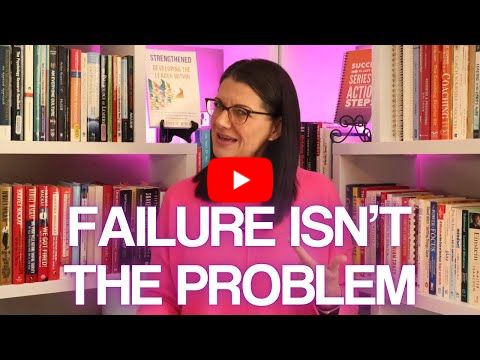
If this resonates, here’s a video that dives even deeper into this idea and shows you how to turn those so-called “failures” into powerful feedback for your growth.
I’ll walk you through the mindset shift that helped me (and many of my clients) stop fearing failure and start using it to fuel momentum. AND, I’ll share a practical coaching tool to help you do the same.
You can watch it here. 👇
|
Until then, be kind to yourself. Especially in the messy moments.
Because leadership isn’t built by getting it perfect.
It’s built by getting back up… just a little wiser than before. 💜🧡
To Your Success,
Laura





Responses