

Time to Read: 3 mins (or 3 hours if you get nerdy with me 🤓)
If you take a peek at my calendar, you’ll see there’s always something joyful for me to look forward to. 🗓️ 👍
Whether big (a travel adventure) or small (a walk with a friend), intentionally scheduling meaningful moments is something I deliberately and intentionally do.
WHY?
Because when you have something meaningful ahead of you, your mind doesn’t stay stuck in the present…
It moves forward.
And that shift matters more than you might realize.
Research shows that when we anticipate future events, some interesting things happen:
- We become more future-oriented in our thinking
- Our brains engage in planning and goal-directed behavior
- We experience greater motivation and follow-through
- We feel a stronger sense of control over our lives
- And overall, our well-being improves
In other words…
When you intentionally place meaningful moments on your calendar, you’re not just giving yourself something to enjoy later…
You’re changing how you think and operate today, which primes your brain to start organizing around what’s ahead.
And in response, your decisions naturally begin to align with where you’re going.
The end result? You create forward momentum… on purpose.
And this consistently moves the needle forward!
Yep! There are neurological and psychological levers being pulled every time you give yourself something to look forward to!
💡 Practionable Takeaway
So, how can you take advantage of this?
Simple…
1️⃣ Identify what’s meaningful for you. Make a list of activities that give you energy and feed your soul.
2️⃣ Scroll through your list and get three meaningful events scheduled.
3️⃣ Each time an event occurs, replace it with another so there are always three on your calendar.
The frequency, activities, and people you include are all up to you.
For me, having something on the calendar every two to three weeks keeps me in forward momentum.
But it took some experimentation to determine that.
And that’s the point.
This isn’t about copying someone else’s system!
It’s about discovering what creates momentum for you.
And that's self-leadership in action.
🎥 Want to Go Deeper?
There’s something else happening here that most people don’t realize.
Yes, having something to look forward to can absolutely shift your mindset…
But it doesn’t fully solve the problem of stress.
Because even with meaningful things on your calendar, stress still shows up.
That’s where a different layer of self-leadership comes in.
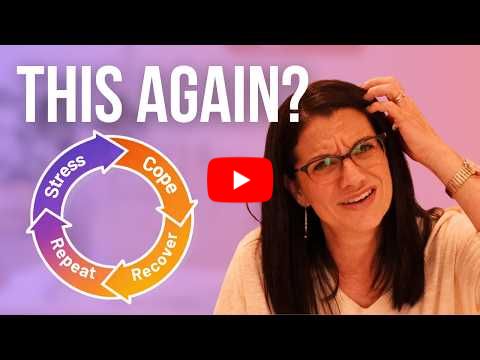
In this week’s video, I break down a simple 3-step framework to help you lead yourself through stress. And not just when it shows up, but in a way that prevents it from taking over in the first place.
You can check it out here.👇
|
To Your Success,
Laura 💜🧡
🤓 P.S. If you want to get nerdy with me, you can read the research studies here (They're quite fascinating!):
Planning for Future Events - https://psycnet.apa.org/doiLanding?doi=10.1037%2F0882-7974.16.2.206 - Keeping meaningful events planned in the future can increase life satisfaction and perceived control.
Episodic Future Thinking - https://nyaspubs.onlinelibrary.wiley.com/doi/10.1196/annals.1440.001 - Imagining future events and goals significantly engages the brain's neural networks associated with planning and motivation.
Personal Goals and Future Events - linkinghub.elsevier.com/retrieve/pii/S1053810018300692 - Personal goals guide the construction and organization of future thoughts, enhancing future orientation and planning capabilities.
Temporal Landmarks and Motivation - https://psycnet.apa.org/doiLanding?doi=10.1037%2Fa0030477 - Significant calendar dates act as temporal landmarks that structure perception of time and boost motivation.
Characteristics of Future-Oriented Thoughts - https://onlinelibrary.wiley.com/doi/10.1002/acp.1647 - Future-oriented thoughts serve various functions such as action planning and decision-making and are associated with higher levels of motivation.




Responses