

Time to Read: 3 mins
Sometimes, leadership lessons come in the most unexpected ways.
Okay, stay with me for a minute...
We don’t eat out a ton. So when we do, I want it to be worth it.
Which means… I have a process. (Of course I do! 🤣)
I check ratings across multiple platforms, read reviews, look to see if the restaurant interacts with the reviewers, and, of course… look at all the yummy photos. 🤤
My goal is to understand the experience other people had. Because dining out is experiential for me.
And this approach generally serves me well.
But recently, I had to check myself.
My husband and I went to a restaurant that had phenomenal ratings.
But when we left, we were both kind of like… meh 🫤
It wasn’t bad, by any means. But somehow, it felt disappointing.
When we couldn't put our finger on why, we started getting a bit more curious.
And the answer had very little to do with the restaurant itself.
The issue was expectation.
Before we ever sat down, our brains had already constructed an experience. The ratings, the reviews, the photos, the comparisons to past restaurants we loved… all of it created a mental forecast for how the evening was supposed to unfold.
So, instead of experiencing the restaurant for what it was, we were unconsciously measuring it against a standard we had already built in our minds.
And that’s when the a-ha hit! 💡
This doesn’t just happen with restaurants.
It happens in leadership, too.
Think about walking into a meeting and expecting people to respond a certain way. Or getting a new opportunity and expecting a particular outcome.
The issue is that once your expectations are locked in place, they shape the experience you have.
Now, being the nerd I am, I looked to see if this was anecdotal or supported by research.
And here’s what I found:
Research in cognitive neuroscience shows us that the brain is constantly using prior experience and expectation to predict what it’s about to encounter, which means expectations don’t just influence experience… they actively shape it.
They affect what we notice, how we interpret situations, and even what we remember afterward. So basically, the brain is actively trying to confirm the forecast it previously created... and setting us up for (disappointment, frustration, anger, fill-in-your-experience-here) in the process.
This is why curiosity matters so much!
Curiosity is the antidote to certainty.
It creates space for observation, which crowds out assumptions. It allows us to see what’s actually there instead of only seeing what we expect to find.
And since putting our beliefs and assumptions in check is foundational to self-leadership, getting curious about our expectations is self-leadership in action.
Woohoo! Self-leadership for the win! 🙌
So, how can you make this work for you?
💡 Practionable Takeaway
Take a peek at where expectations may be influencing or shaping your experience.
Common places where it creeps in are around conversations, meetings, goals, people, outcomes, personal achievement…
Even restaurant experiences 😉.
Then ask:
“What would change if I let go of my expectations and approached this with curiosity?”
That question alone can completely shift what you notice, how you respond, and what becomes possible next.
But don't take my word for it! Experiment with it and prove it to yourself.
🎥 Want to Go Deeper?
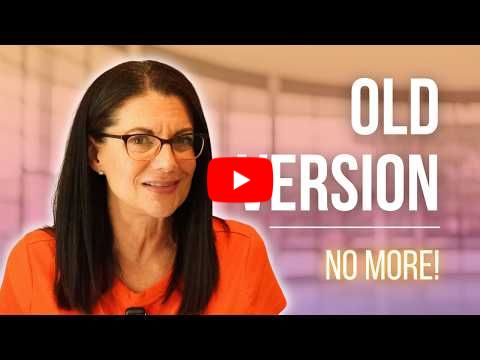
This week’s video explores another place where expectations quietly shape experience: identity.
Because once we become convinced we “know” who we are, we often start protecting outdated versions of ourselves without realizing it.
You can check it out here. 👇
|
To Your Success,
Laura 💜🧡
P.S. If you want to fall down the research rabbit hole with me, check out these studies and articles (ranked in order of nerdiness):
🤓 How Do Expectations Shape Perception? - https://pubmed.ncbi.nlm.nih.gov/30122170/
🤓🤓 How Expectation Influences Perception - https://news.mit.edu/2019/how-expectation-influences-perception-0715
🤓🤓🤓 Prior Expectations Bias Sensory Representations in Visual Cortex - https://www.jneurosci.org/content/33/41/16275





Responses