

Time to Read: 3 mins
A client reached out needing an emergency call as they’d just been "pushed overboard and needed a lifeline.” 🛟
And it was honestly one of the most accurate descriptions of being let go I'd ever heard.
Because transitions don't arrive gently. They often show up abruptly and uninvited, rearranging all the furniture, and then standing there looking at you like, well… what are you going to do now?

And here's what I've seen repeatedly, both in my own life and across hundreds of coaching conversations…
The first story that surfaces in a transition is almost never the most useful one.
It's usually just the most familiar one.
Why?
Because your brain is wired for pattern recognition.
When something changes, it reaches for the nearest available narrative and runs with it. And thanks to our human condition, that default narrative often focuses on the negative first, hijacked by fears of what you'll be losing in the transition.
... Whether that's the job, a piece of your identity, a relationship... or the future you'd already mapped out in your head.
And that's a very real and disruptive loss.
But here's the thing… loss isn't the only story available in a transition. It's just that it's usually the loudest one… at least at first.
So, I hopped on a call with my client.
But instead of swirling around the problem and exploring ways to get through it, we landed on a more meaningful question…
What if this was the opening they’d actually been waiting (if not, begging) for?
You see, they'd spent years feeling misaligned, doing work that no longer fit who they'd become, and suffering in silence because they thought they were too old to explore other options.
(Which they weren't, BTW. But that's for a different newsletter.)
When they took a step back, they were able to see the transition as permission to finally explore other options. 👀
That reframe didn't make the discomfort instantly disappear. After all, transitions are still uncomfortable even when they're pointing you somewhere better.
But it did change their perspective, which shaped everything else that followed.
And for the record, they're now in a completely different career that fully aligns with their values, and they are absolutely thriving! 👏
💡 Practionable Takeaway
If you're in a transition right now, or you feel one on the horizon, try this before you start problem-solving.
1️⃣ Write down the story your brain defaulted to first. The one that showed up before you'd made a single decision or had a single conversation. Don't edit it. Just get it on paper.
2️⃣ Ask yourself: Is this actually true, or is this just familiar? Transitions have a way of activating our most well-worn thought patterns… the ones we've been running for so long that we mistake them for facts.
3️⃣ Write down one alternative story that is equally plausible. You don't have to believe it yet. You just have to be willing to hold it alongside the first one. That small act of examination is often where everything starts to shift.
Because the story you tell yourself IN the transition shapes what feels possible on the other side of it.
And you, as a self-leader, get to have some say in what that story is.
That's self-leadership in action. 🧠✨
🎥 Want to Go Deeper?
Speaking of the stories we tell ourselves…
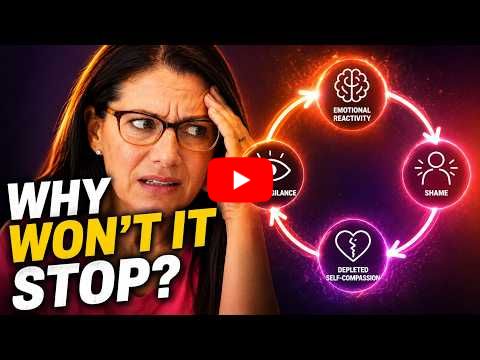
There's an interesting one that shows up in our best moments, but does so in a way that completely undermines them.
New research is revealing exactly why it happens…
And it's an eye-opening surprise that, once you understand, can help you disrupt the cycle in motion.
You can check it out here. 👇
|
To Your Success,
Laura 💜🧡




Responses